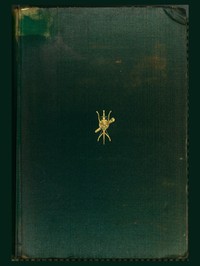
Joseph Ritson's 1795 compilation, reprinted here from his annotated 1832 edition, gathers every known Robin Hood ballad into a single volume, prefaced by historical anecdotes that attempt to separate legend from fact. The 1885 edition adds eighty wood engravings by Thomas Bewick and nine etchings by Alfred Tourrier and Edwin Buckman, making this a bibliophile's artifact as much as a scholarly resource. The ballads span from the medieval 'A Lytell Geste of Robyn Hode' to later broadsides, revealing how the outlaw's story shifted across centuries.
The Compiler's Approach
Ritson opens with a lengthy 'Life of Robin Hood' that draws on chronicles and local traditions, asserting the outlaw's historical existence while acknowledging contradictory accounts. He cites sources like Stow and Holinshed, and includes notes on etymology and place-names. The editorial apparatus—footnotes, variant readings, and a glossary—shows Ritson's philological rigor. Readers should note that the 'Life' is not a narrative but a collation of evidence, often speculative. The ballads themselves are presented in chronological order, with Ritson's headnotes explaining manuscript provenance and dating.
The 'Lytell Geste' as Core Text
The first and longest ballad, 'A Lytell Geste of Robyn Hode,' spans eighty pages and establishes the core episodes: Robin's encounter with a knight, his dealings with the Sheriff of Nottingham, and his eventual pardon by King Edward. The language is Middle English, with archaic spellings like 'wolwarde' and 'hypped.' Key moments include Robin's refusal to dine with the king until he can 'shote at the donne dere,' and his final betrayal by the Prioress of Kirklees. The ballad's structure—rhyming quatrains with incremental repetition—creates a driving rhythm that rewards reading aloud.
Later Ballads and Shifting Tones
After the 'Geste,' the collection includes shorter pieces like 'Robin Hood and the Potter' and 'Robin Hood and Guy of Gisborne,' which introduce magical elements and more violent confrontations. The tone varies: some ballads are comic, others elegiac. In 'Robin Hood's Birth, Breeding, Valour, and Marriage,' the hero is given a noble lineage, while 'Robin Hood and the Bishop' satirizes clerical greed. The later ballads often feature Little John and Will Scarlet more prominently, and the settings shift from Sherwood to specific locales like Wakefield and Nottingham.
Illustrations and Textual Evidence
Thomas Bewick's wood engravings, printed on China paper, depict scenes from the ballads with meticulous naturalism—oak leaves, longbows, and medieval costume. The nine etchings by Tourrier and Buckman, included in duplicate (one on Whatman paper, one on Japanese), offer a contrasting romantic style. These illustrations are not merely decorative; they interpret the text, emphasizing moments of action or pathos. For instance, the frontispiece shows Robin blowing his horn, a recurring motif. Readers should compare the visual choices with the ballad descriptions to see how illustrators shaped the outlaw's image.
Approach this edition as a historical document rather than a novel. The ballads reward comparison: note how the same episode—Robin's meeting with the king—differs between the 'Geste' and later versions. The glossary and notes are essential for navigating archaic language. For a first reading, start with the 'Lytell Geste' to grasp the foundational narrative, then sample later ballads to see how the tradition expanded. The illustrations offer a parallel commentary on the text's reception.
Holding this old collection, I recalled crouching in my grandfather’s attic with a flashlight, tracing the outlaw’s slow sorrow from that first bold yeoman to the kin-betrayed wanderer. That ache of watching a hero fade felt familiar. The same quiet melancholy surfaced years later when I lingered over The Southern war poetry of the Civil War — Reading Companion, its lines whispering of lost causes and loyal ghosts. Some songs simply remember what it means to mourn.