About 68 minutes
General William Booth Enters into Heaven, and Other Poems — Edition Insights
Fantasy Juvenile Worlds
15,550 recorded words. 1 minutes difference from this book's estimate.
View Gutenberg source #424
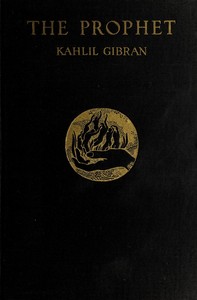
This digital edition of The Prophet — Themes and Context is described by source-level measurements including 15,747 words, 1 hr 9 min estimated reading time, and 29 detected text sections.
The text analysis averages about 20.2 words per sentence, while the detected sections provide another way to judge how the source is divided.
Project Gutenberg metadata also associates the work with “Mysticism -- Poetry,” connecting these edition facts with the source record’s subject description.
Explore this collection
These alternatives are selected using recorded categories and estimated reading time.
About 68 minutes
Fantasy Juvenile Worlds
15,550 recorded words. 1 minutes difference from this book's estimate.
View Gutenberg source #424About 72 minutes
Fantasy Juvenile Worlds
16,422 recorded words. 3 minutes difference from this book's estimate.
View Gutenberg source #52761About 64 minutes
Fantasy Juvenile Worlds
14,584 recorded words. 5 minutes difference from this book's estimate.
View Gutenberg source #13647Search stored excerpts and compare books → Choose by your preferences →
Choices use stored catalog measurements. Estimates vary with reading speed. A shared category is a catalog label, not a claim that two books have the same argument or literary quality.
Search reads excerpt text stored with this catalog and links to its associated Gutenberg record. The connection is stored in the site database; this tool does not recheck that every excerpt is word-for-word identical to that external record. Excerpt search does not cover every chapter and does not verify historical publication dates.
Catalog snapshot checked: 2026-09-25. Coverage: 96 public books, 96 available source excerpts.
Read the complete public-domain text at its original source.
Read on Project GutenbergKahlil Gibran's The Prophet opens with a departure: Almustafa, having waited twelve years in Orphalese, sees his ship arrive and feels both joy and sorrow. The narrative frame is brief but crucial, establishing a tone of imminent farewell that colors every subsequent discourse. The prose in these early pages moves between declarative statements—'the gates of his heart were flung open'—and introspective questions that reveal the speaker's ambivalence. This tension between leaving and staying, between speech and silence, recurs throughout the work, often surfacing in the way Gibran balances direct address with metaphorical abstraction.
The book's structure is deceptively simple: a series of teachings prompted by the townspeople, each introduced by a formulaic request—'Speak to us of Love,' 'Speak to us of Time.' Yet the framing narrative subtly alters the pace. The opening and closing sections, 'The Coming of the Ship' and 'The Farewell,' are more expansive and emotionally charged than the interior chapters. In these bookends, Gibran uses longer sentences and cumulative imagery: 'Too many fragments of the spirit have I scattered in these streets, and too many are the children of my longing that walk naked among these hills.' The interior discourses, by contrast, often rely on short, aphoristic statements—'For thought is a bird of space'—creating a staccato rhythm that contrasts with the flowing sorrow of the frame.
Gibran's narrator consistently undermines the very act of speaking. In 'On Talking,' Almustafa warns that 'when you can no longer dwell in the solitude of your heart you live in your lips.' The ideal, he suggests, is a 'rhythmic silence' where truth dwells without words. This paradox—using language to advocate for silence—shapes the book's voice. The teachings are often structured as a series of negations: 'You are good when you are one with yourself. Yet when you are not one with yourself you are not evil.' Such balanced clauses create a measured, almost judicial tone, but they also resist easy categorization. The speaker rarely condemns; instead, he reframes oppositions as complementary, as when he says of time that 'let today embrace the past with remembrance and the future with longing.'
Certain images recur across the excerpts, lending the text a cohesive texture. The sea appears as both a literal destination and a symbol of calling: 'The sea that calls all things unto her calls me.' Birds and flight serve as metaphors for thought and freedom—'thought is a bird of space'—while the eagle's solitary flight echoes Almustafa's own departure. The body and its parts are frequently invoked: the tongue, the lips, the heart, the skin. Almustafa speaks of tearing off a 'skin' rather than casting off a garment, a visceral image that recurs in the idea of the heart made 'sweet with hunger and with thirst.' These motifs are not developed into a systematic symbolism; rather, they appear and reappear, giving the prose a dreamlike consistency.
Readers attentive to shifts in register will notice that Gibran's prose moves between the oracular and the intimate, often within a single paragraph. The book rewards slow reading: its aphorisms gain force when considered in relation to the framing narrative of departure. Pay particular attention to the way Almustafa's farewell echoes the opening, creating a circular structure that mirrors the cyclical view of time expressed in the discourse 'On Time.' The Prophet is less a systematic philosophy than a series of meditations held together by a single, resonant voice.
There’s a particular ache in Almustafa’s farewell, that slow turning toward the ship, that I keep returning to. It reminded me, strangely, of the quiet tensions in The Norse king's bridal — Reading Notes—how leaving and staying can be the same gesture, worn thin over time. A familiar, haunting echo.
Create a short personal record of your experience with this book.