About 64 minutes
Nonsense Songs — Themes and Context
Fantasy Juvenile Worlds
14,584 recorded words. 6 minutes difference from this book's estimate.
View Gutenberg source #13647
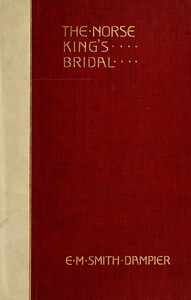
For The Norse king's bridal — Reading Notes, the stored edition analysis reports 13,294 words, 58 min estimated reading time, and 3 detected text sections.
The text analysis averages about 19.6 words per sentence, while the detected sections provide another way to judge how the source is divided.
Project Gutenberg metadata also associates the work with “Ballads, English,” connecting these edition facts with the source record’s subject description.
Explore this collection
These alternatives are selected using recorded categories and estimated reading time.
About 64 minutes
Fantasy Juvenile Worlds
14,584 recorded words. 6 minutes difference from this book's estimate.
View Gutenberg source #13647About 68 minutes
Fantasy Juvenile Worlds
15,550 recorded words. 10 minutes difference from this book's estimate.
View Gutenberg source #424About 69 minutes
Fantasy Juvenile Worlds
15,747 recorded words. 11 minutes difference from this book's estimate.
View Gutenberg source #58585Search stored excerpts and compare books → Choose by your preferences →
Choices use stored catalog measurements. Estimates vary with reading speed. A shared category is a catalog label, not a claim that two books have the same argument or literary quality.
Search reads excerpt text stored with this catalog and links to its associated Gutenberg record. The connection is stored in the site database; this tool does not recheck that every excerpt is word-for-word identical to that external record. Excerpt search does not cover every chapter and does not verify historical publication dates.
Catalog snapshot checked: 2026-09-25. Coverage: 96 public books, 96 available source excerpts.
Read the complete public-domain text at its original source.
Read on Project GutenbergThe collection opens with a preface in which E. M. Smith-Dampier states that her translations from the Danish adhere strictly to the original metres, while those from Old Norse do not. She describes her original ballads as “pure inventions,” not versifications of Northern legends. This editorial note examines how the volume’s structure—alternating translations with original poems—and its recurring images of sea, bridal journeys, and supernatural encounters shape the reading experience.
Several ballads hinge on a crossing from sea to land or vice versa. In “The Norse King’s Bridal,” a king sails to claim a bride; in “Ballad of the Turning Tide,” a mermaid watches ships “sail in and out / Among the rugged rocks,” and later a rover “leapt to land.” The tide itself becomes a character, whispering “among the reeds” and carrying ships. This repeated movement creates a rhythm of approach and withdrawal, often marking a threshold between mortal and supernatural realms.
Two ballads open with a woman combing her hair: the mermaid “combing her lint-white locks” and, in “Agnes and the Merman,” a similar image. Bridal attire appears in “The Norse King’s Bridal” and “The Bride’s Bracelet,” where a bracelet becomes a token of binding. These objects—combs, locks, bracelets—link femininity, magic, and transition. The combing action, especially, suggests preparation or enchantment, as when the mermaid’s combing precedes her spell.
Many poems use direct speech to heighten drama. In “Ballad of the Turning Tide,” the mermaid declares, “I’ve laid my love on a mortal man, / And I will have him yet!” Refrains like “Ho, ho, for the kiss of the salt sea-spray” echo across stanzas, giving the collection a song-like quality. The preface notes that the original ballads are “pure inventions,” yet they adopt the same direct, refrain-driven style as the translations, blurring the line between translated and original work.
The volume is divided into three sections: translations from Old Norse, translations from Danish, and original ballads. This arrangement invites comparison. For instance, “The Waking of Angantheow” (Old Norse) and “The Norse King’s Bridal” (Danish) both involve a quest, but the former is steeped in curse-lore while the latter is a bridal journey. The original poems, such as “Ballad of the Turning Tide,” reuse motifs like mermaids and spells, but with more psychological interiority—the maiden Æthelgif stands “like one in a waking dream.”
Readers may find it useful to read the preface first, as it clarifies Smith-Dampier’s approach to metre and originality. Pay attention to how the same image—a comb, a ship, a bridal dress—recurs across sections, and note where the poet’s own inventions diverge from the translated sources. The collection rewards a non-linear reading, moving between Old Norse, Danish, and original pieces to trace shared patterns.
There’s something about those old bridal quests and the grey sea between kingdoms that stays with me long after closing the book. It reminds me of evenings spent in the Scottish border ballads, where the same cold water and fierce longing appear, though the hills replace the fjords. I keep returning to that ache in the distance. Minstrelsy of the Scottish border, Volume 1 — Story, Setting & Ideas feels like a familiar shore, somehow.
Use these questions to collect your thoughts before moving on.