About 72 minutes
Salt-Water Ballads — Edition Insights
Fantasy Juvenile Worlds
16,422 recorded words. 4 minutes difference from this book's estimate.
View Gutenberg source #52761
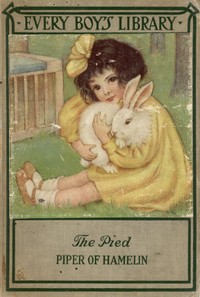
The Pied Piper of Hamelin, and Other Poems Every Boy's Library — A Closer Reading can be approached with a clearer sense of reading commitment from its source measurements: 17,258 words, 1 hr 16 min estimated reading time, and 4 detected text sections.
The text analysis averages about 21.5 words per sentence, while the detected sections provide another way to judge how the source is divided.
Project Gutenberg metadata also associates the work with “Children's poetry,” connecting these edition facts with the source record’s subject description.
Explore this collection
These alternatives are selected using recorded categories and estimated reading time.
About 72 minutes
Fantasy Juvenile Worlds
16,422 recorded words. 4 minutes difference from this book's estimate.
View Gutenberg source #52761About 69 minutes
Fantasy Juvenile Worlds
15,747 recorded words. 7 minutes difference from this book's estimate.
View Gutenberg source #58585About 68 minutes
Fantasy Juvenile Worlds
15,550 recorded words. 8 minutes difference from this book's estimate.
View Gutenberg source #424Search stored excerpts and compare books → Choose by your preferences →
Choices use stored catalog measurements. Estimates vary with reading speed. A shared category is a catalog label, not a claim that two books have the same argument or literary quality.
Search reads excerpt text stored with this catalog and links to its associated Gutenberg record. The connection is stored in the site database; this tool does not recheck that every excerpt is word-for-word identical to that external record. Excerpt search does not cover every chapter and does not verify historical publication dates.
Catalog snapshot checked: 2026-09-25. Coverage: 96 public books, 96 available source excerpts.
Read the complete public-domain text at its original source.
Read on Project GutenbergRobert Browning's collection opens with the well-known 'The Pied Piper of Hamelin,' a child's story in verse that immediately establishes a pattern of rhythmic, rhyming couplets and a direct address to the reader. The poem's structure—a series of stanzas with varying line lengths—creates a musical quality that mirrors the piper's own tune. The setting is precisely located: 'Hamelin Town's in Brunswick, / By famous Hanover city; / The river Weser, deep and wide, / Washes its wall on the southern side.' This geographical specificity grounds the fantastical tale in a recognizable world, a technique Browning employs throughout the collection.
The subsequent poems, such as 'Hervé Riel' and 'How They Brought the Good News from Ghent to Aix,' continue this pattern of vivid, action-driven narratives. Browning's verse often moves rapidly between scenes, using enjambment and abrupt shifts in perspective to maintain momentum. The recurring image of the horse—central to several poems—serves as a vehicle for both literal journeys and metaphorical explorations of loyalty, courage, and sacrifice.
Browning's poems are characterized by their strong, often irregular rhythms that propel the narrative forward. In 'The Pied Piper of Hamelin,' the meter shifts between iambic and anapestic feet, creating a sing-song quality that suits the fairy-tale tone. The poem's refrain-like repetition of 'Rats!' and the piper's 'piping' reinforces the musicality. Similarly, 'How They Brought the Good News from Ghent to Aix' employs a driving dactylic meter that mimics the galloping of horses: 'I galloped, Dirck galloped, we galloped all three.' This rhythmic urgency is a hallmark of Browning's style, drawing the reader into the action.
The structure of each poem often mirrors its content. For instance, 'Incident of the French Camp' uses short, punchy lines to convey the suddenness of the battle scene, while 'Clive' employs longer, more discursive lines to accommodate its historical scope. The varying line lengths and stanza forms prevent monotony and allow Browning to modulate pace and emphasis.
Horses appear prominently in several poems, serving as symbols of speed, loyalty, and status. In 'Muléykeh,' the mare is described as 'the Pearl,' a prize beyond price, and the poem revolves around the conflict between Hóseyn and Duhl over her possession. The horse is not merely a means of transport but an extension of the owner's honor. Similarly, in 'How They Brought the Good News,' the horses are named and their endurance is central to the mission. The journey motif recurs across the collection: characters ride, march, or flee, and the landscape is often sketched in swift, impressionistic strokes.
Confrontations—whether with rats, enemies, or moral dilemmas—drive the plots. In 'The Pied Piper,' the confrontation is between the townspeople and the piper, leading to the famous disappearance of the children. In 'The Glove,' a lady's challenge to a knight results in a public test of courage. These encounters are often resolved through decisive action or ironic reversal, reflecting Browning's interest in human character under pressure.
Browning frequently moves between different locations and viewpoints within a single poem, creating a cinematic quality. In 'Hervé Riel,' the action shifts from the French fleet to the English shore, then back to the ship, as the protagonist executes his daring plan. The poem 'Through the Metidja to Abd-el-kadr' follows a rider 'bound on bound full galloping, nor bridle drew until he reached the mound,' capturing the relentless forward motion of the journey. These shifts are often signaled by changes in stanza or by abrupt transitions in the narrative voice.
The collection also includes poems that shift between past and present, or between direct speech and third-person narration. In 'A Tale,' the narrator recounts a story within a story, layering perspectives. This technique allows Browning to explore multiple facets of an event or character, enriching the reader's understanding without sacrificing narrative drive.
Beneath the surface of adventure and fantasy, these poems engage with moral questions. 'The Pied Piper' warns against broken promises and the consequences of greed, as the townspeople's refusal to pay leads to the loss of their children. 'The Glove' examines pride, honor, and the performative nature of courtly love. 'Gold Hair' presents a tale of vanity and hidden sin, while 'Donald' explores themes of loyalty and sacrifice. The poems often conclude with a pointed moral or ironic twist, inviting reflection.
The catalog subjects—'Conduct of life,' 'Avarice,' 'Courage,' 'Promises'—underscore these ethical dimensions. Browning does not preach, but embeds his lessons within vivid narratives. The reader is left to draw their own conclusions, though the poems' resolutions often suggest a clear judgment. This combination of entertainment and instruction aligns with the collection's place in 'Every Boy's Library,' a series intended for young readers.
This collection offers a varied introduction to Browning's narrative verse, with poems that range from light-hearted fairy tales to intense historical dramas. Readers may find it rewarding to compare the different uses of rhythm and imagery across the poems, noting how Browning adapts his style to suit each story. The recurring motifs of horses, journeys, and confrontations provide a unifying thread, while the moral undercurrents invite thoughtful consideration. Approach these poems as performances in verse, where sound and sense work together to create lasting impressions.
Somewhere between the rhythm of Browning’s piper and the stern hoofbeats of his travelers, I found myself thinking of that other collection, with its colder roads and quieter reckonings. The Expedition to Birting's Land, and Other Ballads — Story, Setting & Ideas lingered like a distant echo—less moralizing, more wondering—as if both books shared a fondness for motion, but not the same destination.
A brief reflection can help important ideas stay with you longer.