
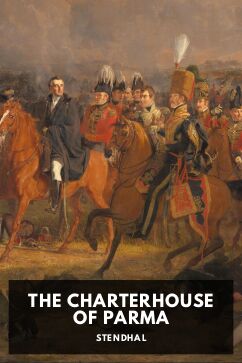
The Charterhouse of Parma - Stendhal
Stendhal’s The Charterhouse of Parma is a novel that moves at a breakneck speed, especially for something written in 1839. It follows the life of Fabrizio del Dongo, a young Italian aristocrat with more passion than sense. Swept up in the excitement of Napoleon’s return, he rushes off to fight at the Battle of Waterloo—a famously chaotic and disorienting sequence that feels incredibly modern. After that disaster, he returns to the small, fictional Duchy of Parma, a hotbed of gossip, intrigue, and absolute pettiness masquerading as statecraft.
The Story
Back in Parma, Fabrizio’s life becomes a series of passionate blunders. He joins the church for a career, not out of faith. He falls desperately in love with Clelia, the beautiful daughter of the governor of the Farnese Tower, the fortress prison he’s eventually thrown into. His sentence? For killing a man in a duel... or maybe just for being an inconvenience to the powerful. His real lifeline is his brilliant and devoted aunt, the Duchess Sanseverina, who uses all her political cunning and charm to try to free him, navigating a court ruled by a paranoid prince and his sinister prime minister, Count Mosca. The plot is a whirlwind of escape plans, secret messages, romantic agony, and brutal political calculations.
Why You Should Read It
What makes this book so alive is its voice. Stendhal writes with a witty, almost conversational irony. He doesn’t just tell you the court is corrupt; he shows you the hilarious, depressing minutiae of its corruption. Fabrizio is a fascinating hero because he’s not particularly clever or strategic. He’s impulsive, sincere, and emotionally transparent in a world that values the exact opposite. You root for him even as you shake your head at his choices. The book is less about grand historical events and more about how individuals—the naive, the cunning, the passionate—navigate the rigid, often absurd systems built to control them.
Final Verdict
This is the perfect classic for someone who thinks classics are stuffy or slow. It’s for readers who love rich historical settings but want the focus to be on flawed, compelling characters and sharp social observation. If you enjoyed the political machinations of Game of Thrones (but with carriages instead of dragons) or the ironic humor of Jane Austen’s narration, you’ll find a lot to love here. It’s a vibrant, energetic, and surprisingly human story about the cost of integrity and the messy, unpredictable nature of love and ambition.
Legal analysis indicates this work is in the public domain. Feel free to use it for personal or commercial purposes.








Ashley Flores
1 year agoFrom the very first page, the content flows smoothly from one chapter to the next. A valuable addition to my collection.