
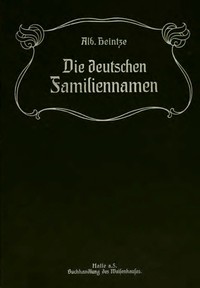
Die Deutschen Familiennamen, geschichtlich, geographisch, sprachlich by Heintze
Okay, let's be clear from the start: this is not a beach read. Die Deutschen Familiennamen by Albert Heintze is a serious, scholarly work first published in the late 19th century. But don't let that scare you off. Think of it as the ultimate origin story book, but for last names instead of superheroes.
The Story
There isn't a plot in the traditional sense. Instead, Heintze acts as a guide, systematically exploring where German surnames came from. He breaks them down into clear categories. A huge chunk come from old jobs—your ancestor was the blacksmith, so you became 'Schmidt'. Many are based on where people lived—'von der Heide' (from the heath) or 'Klein' (who lived in a small house). Others started as simple nicknames describing a person ('Kurz' for short, 'Braun' for brown hair). He traces how these naming customs solidified around the 12th to 15th centuries, turning from fluid descriptions into permanent family labels passed down through generations. He also looks at how names changed as people moved, got misspelled by officials, or were shortened over time.
Why You Should Read It
I picked this up out of casual curiosity about my own name and ended up completely absorbed. The magic is in the details. It transforms a mundane thing—a last name—into a tiny, personal window into history. You start seeing stories everywhere. That friend named 'Wagner'? Her ancestors made wagons. 'Fuchs' (fox)? Maybe an ancestor was clever or red-haired. It adds a layer of depth to your understanding of culture and family that's surprisingly moving. It's not just about Germans; the principles apply to many cultures, making you ponder your own lineage. Heintze's work is foundational, so it feels like you're getting the information straight from the source.
Final Verdict
This book is perfect for history buffs, genealogy enthusiasts, linguists, or anyone with a German surname (or an interest in them). It's also great for writers looking for authentic naming ideas. It is a dense, factual reference, so read it in chunks rather than all at once. If you're looking for a light narrative, this isn't it. But if you've ever stared at a list of names and wondered about the lives hidden behind them, Heintze's book is a treasure trove. It turns every introduction into a potential history lesson.
This publication is available for unrestricted use. Enjoy reading and sharing without restrictions.
Donald Scott
1 year agoHelped me clear up some confusion on the topic.
Ashley Hill
6 months agoVery interesting perspective.
Lisa Martinez
1 year agoHonestly, the pacing is just right, keeping you engaged. Exactly what I needed.
Christopher Wilson
1 year agoMy professor recommended this, and I see why.



Liam Harris
5 months agoHonestly, it creates a vivid world that you simply do not want to leave. I would gladly recommend this title.