About 223 minutes
Ballads of American bravery — A Closer Reading
Fantasy Juvenile Worlds
51,119 recorded words. 28 minutes difference from this book's estimate.
View Gutenberg source #76664
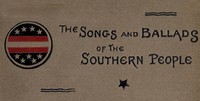
Before opening Songs and Ballads of the Southern People: 1861-1865 — Reading Companion, the edition data offers a quick orientation: 44,757 words, 3 hr 15 min estimated reading time, and 7 detected text sections.
The text analysis averages about 17.9 words per sentence, while the detected sections provide another way to judge how the source is divided.
Project Gutenberg metadata also associates the work with “United States -- History -- Civil War, 1861-1865 -- Poetry,” connecting these edition facts with the source record’s subject description.
Explore this collection
These alternatives are selected using recorded categories and estimated reading time.
About 223 minutes
Fantasy Juvenile Worlds
51,119 recorded words. 28 minutes difference from this book's estimate.
View Gutenberg source #76664About 161 minutes
Fantasy Juvenile Worlds
36,823 recorded words. 34 minutes difference from this book's estimate.
View Gutenberg source #66385About 144 minutes
Fantasy Juvenile Worlds
32,928 recorded words. 51 minutes difference from this book's estimate.
View Gutenberg source #7846Search stored excerpts and compare books → Choose by your preferences →
Choices use stored catalog measurements. Estimates vary with reading speed. A shared category is a catalog label, not a claim that two books have the same argument or literary quality.
Search reads excerpt text stored with this catalog and links to its associated Gutenberg record. The connection is stored in the site database; this tool does not recheck that every excerpt is word-for-word identical to that external record. Excerpt search does not cover every chapter and does not verify historical publication dates.
Catalog snapshot checked: 2026-09-25. Coverage: 96 public books, 96 available source excerpts.
Read the complete public-domain text at its original source.
Read on Project GutenbergFrank Moore's 1886 collection Songs and Ballads of the Southern People: 1861-1865 presents itself as a preservationist project, gathering verse that 'better than any other medium, exhibit the temper of the times and popular feeling.' The editor's note frames the songs as historical documents, not literary artifacts, and explicitly invites readers to submit additional material for 'permanent preservation.' This editorial stance—emphasizing completeness and authenticity over aesthetic evaluation—shapes how the excerpts function: they are offered as evidence of Confederate sentiment rather than as polished poetry.
The catalog subjects classify this work under 'War poetry, American' and 'American poetry — Southern States,' but the excerpts reveal a more specific rhetorical project. Poems like John R. Thompson's 'A Poem for the Times' open with a defiant question—'Who talks of Coercion? Who dares to deny / A resolute people their right to be free?'—and frame secession as a natural right, comparing it to 'one star from the sky' or 'one wave of the sea.' A. F. Leonard's 'Land of the South' similarly constructs a regional identity through repeated invocations: 'Land of the South! the fairest land,' 'Men of the South! a free-born race,' 'Fair of the South! rare beauty's crown.' These anaphoric structures build a collective Southern 'we' that is both geographic and ideological. The poems do not argue for political independence through legal reasoning; instead, they rely on emotional appeals to liberty, honor, and divine favor, as in Leonard's closing stanza: 'God of the South! protect this land / From false and open foes!'
Several excerpts shift focus from battlefield rhetoric to home-front sacrifice, particularly through female figures. One anonymous poem narrates a woman's nighttime journey to warn a Southern camp, describing her as 'alone a woman kneels' in prayer before she 'glideth upon her way, / Through the lonely, misty street.' The poem explicitly compares her to a 'Tyrol maiden' and a 'noble Scottish maid,' placing her within a tradition of heroic women who act at personal risk. The language emphasizes physical strain—'languor doth seize on her feeble knees'—and emotional cost: 'And sadly they gaze by the torch's blaze, / And the tears unbidden start.' These domestic scenes complicate the catalog subject 'United States — History — Civil War, 1861-1865 — Poetry' by showing that the poetry includes not only martial themes but also intimate portrayals of civilian endurance and gendered courage.
Moore's note to readers makes explicit claims about the collection's value: 'The historical value of the productions is admitted. Age will not impair it.' This assertion positions the songs as primary sources rather than literary works, a framing that the catalog subjects partially reflect but do not fully capture. The editor also acknowledges that some authors requested anonymity, and he respected those wishes, stating that 'the spirit, meaning and intent not being affected, nor in the least abated by such a course.' This editorial practice suggests that the collection prioritizes representative sentiment over individual attribution. The excerpts themselves, however, do not uniformly support Moore's claim that songs 'carried in the memory are earliest forgotten'—the poems are formal, printed compositions, not folk songs. Readers should note this tension between the editor's rhetoric of oral preservation and the actual literary character of the pieces.
Moore's collection offers a curated view of Confederate-era verse, filtered through a Northern editor's preservationist lens. Readers interested in the intersection of poetry and historical memory will find the editor's prefatory remarks as revealing as the poems themselves. The excerpts reward attention to recurring rhetorical strategies—apostrophe, anaphora, and appeals to divine sanction—that construct a unified Southern identity. For a fuller understanding, compare these poems with contemporaneous Union verse to see how each side mobilized similar poetic forms for opposing causes.
I’ve spent many evenings with Frank Moore’s collection, the war’s grief tucked into its verses. Those songs of longing and home hold a particular ache. Oddly, I’m reminded of my worn copy of Salt-Water Ballads — Edition Insights—both speak of what men carry when the sea, or the cause, takes them far from familiar hearths. A quiet kinship, that.
Capture what you thought, learned, and would like to remember.