T
TheGardenMaster
Guest
- Thread Author
- #1
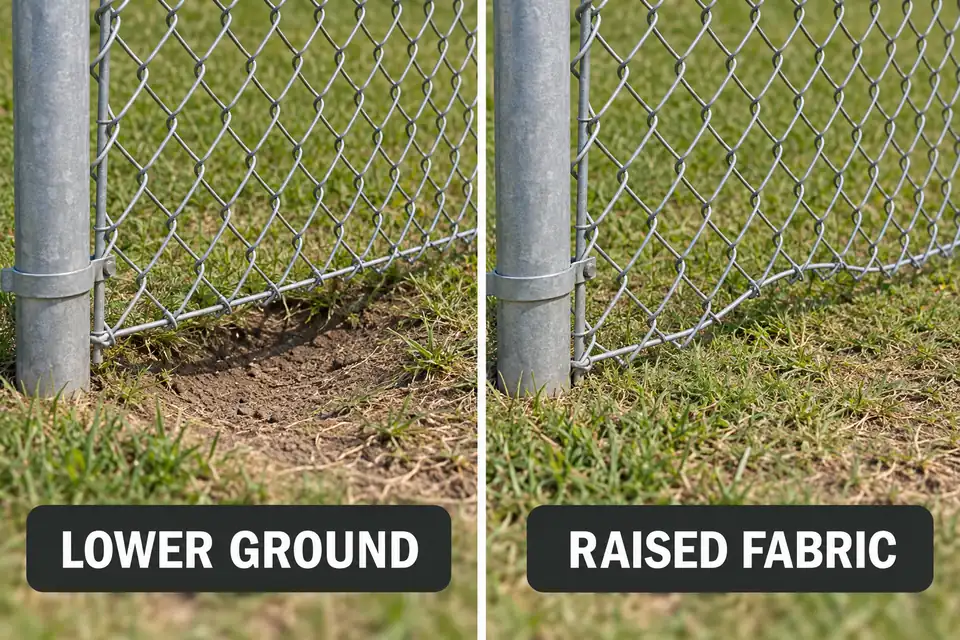
A growing gap under a chain-link fence means the ground, the fence fabric, or both have changed position. The useful first check is which edge moved. Soil restoration and fabric repair solve different problems, even when the opening looks similar.
Compare the ground surface with the bottom edge of the mesh, also called fence fabric. Soil may have dropped beneath an unchanged fence. The fabric may have lifted above intact ground. Sometimes a washout creates an opening that an animal then enlarges by digging or pushing the loose edge.
If the opening could allow a pet through, keep the animal away from that section while you investigate. Containment needs attention immediately, even when the cause remains uncertain.
Compare the affected section with the neighboring sections before touching anything. Does the mesh maintain a similar line while the ground dips underneath? Or does the mesh itself rise locally above an otherwise continuous strip of ground?
Chain-link fabric is held by its framework and attachments. It cannot follow soil that washes away, settles, or gets removed beneath it. Its lower edge can also curl or become displaced while the ground remains intact.
A broad opening across a depression calls for a different investigation from a small opening beneath an upward-curved edge. A pocket near a post deserves attention to the post base, especially if that post has changed alignment.
Establish whether the gap is actually growing. An old photograph may show that the fence always bridged a low spot. Recently trimmed grass can expose clearance that previously looked closed. Visible soil or hardware changes carry more diagnostic weight than an opening that simply became easier to see.
Look for missing ground beneath an otherwise consistent fabric edge. Small channels leading toward the opening, newly exposed roots, or fine sediment deposited farther downhill support an erosion explanation. The strongest evidence connects the water’s route with fresh soil loss at the fence.
If those clues point to runoff eroding the fence line, follow the water’s approach as well as the opening itself. The gap may be the receiving point for flow concentrated elsewhere in the yard.
Rainfall timing helps, but it does not prove erosion. Recently placed soil can settle after wetting without being carried away. Landscaping may also have removed a strip of ground, leaving the fence at its original height.
Look for where displaced soil went. A depression without sediment or flow marks keeps settlement, excavation, and deliberate grade changes in the investigation. It does not rule erosion out, but it gives you less evidence for choosing a drainage repair.
Trace the lower mesh edge across the opening. If it curves upward while the surrounding soil remains relatively continuous, inspect the fabric’s restraint and connections.
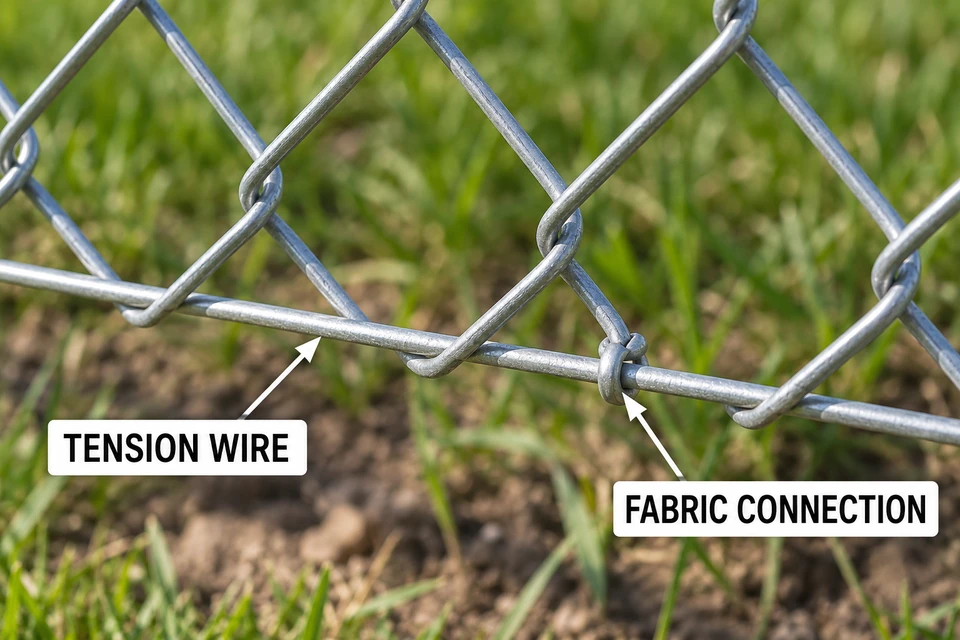
Visible disconnected attachments strengthen this explanation. A bottom tension wire can remain in place while the fabric separates from it, so seeing a wire does not establish that the mesh is still restrained. Compare the affected attachment with an intact one nearby.
Also distinguish a locally curled edge from movement involving the posts and the whole fence section. If a post has moved, it is no longer a reliable reference for deciding whether only the fabric changed.
Both mechanisms can occur together: soil washes out, the exposed lower edge becomes easier to push, and repeated pressure enlarges the opening. Tightening a wire will not replace missing ground, and adding soil will not restore a disconnected attachment.
Fresh digging can explain why an opening keeps enlarging without explaining how it started. Look for a scooped depression, loose soil pushed away from the gap, tracks, or repeated disturbance at the same accessible edge. Hole shape alone cannot reliably identify the animal or which side it approached from.
An existing washout can provide room to start digging, while an unsecured fabric edge can move farther upward during repeated passage. Repairing only the soil in that situation leaves the loose edge available to move again.
Fresh disturbance during otherwise dry weather can help separate repeated excavation from rain-related change. Rain can flatten tracks and redistribute loose soil, however, so the absence of clear prints does not rule animal activity out. Compare fresh photographs rather than relying on a single inspection after a storm.
Document the area before smoothing or filling it. Do not use your pet to test whether the gap is passable. If the opening appears to lead into an occupied burrow, avoid reaching inside or sealing it until you have appropriate wildlife guidance.
Identify what currently restrains the lower edge before deciding a component is missing. The fence may have a tension wire, a bottom rail, or neither. The absence of tension wire alone does not explain a newly growing gap; the fence may have been built that way.
A bottom tension wire runs along the lower fabric. It differs from the vertical tension bar securing the mesh at an end or corner post. Where tension wire is present, look for the rings connecting it to the fabric. Follow the actual connections rather than assuming that two crossing wires are attached.
Check the framework separately. Modest mesh flexibility differs from a post moving at its base. Look for changed alignment, separation around the base, or exposed support. On a safely accessible post that is not visibly compromised, light hand pressure may reveal movement; do not force a leaning post.
Recent landscape work provides another reference. For a front-yard fence, grade problems after regrading or hardscaping may explain why the ground no longer meets the existing fence line.
Use this compact field check:
Repeat measurements at the same locations, using photographs that include both the ground and fence. Do not cut, loosen, or retension wire as part of the diagnosis.
Fill belongs in the repair only after you establish why the ground is low and whether the fence is stable. If runoff keeps removing soil, address the incoming water path and assess any undermined post support before restoring the ground.
Once that source is controlled, erosion-control materials for the affected slope can help with the separate decision of protecting restored soil. Surface stabilization cannot reconnect loose mesh or secure a moving post.
Where the ground and posts remain stable but the fabric has lifted, the repair belongs at the damaged fabric or its restraint. Piling soil against that section may conceal the opening while leaving the attachment problem unchanged.
Repeated excavation requires attention to recurring animal access as well as the disturbed ground. Loose fill alone does not establish durable containment. If recent grading lowered the surface, reconcile the fence with the intended finished grade instead of creating an improvised berm against the mesh.
A moving post, an undermined base, or uncertainty about support warrants a fence professional’s assessment before cosmetic filling. Where soil loss and fabric movement coexist, both need attention. Chain-link fabric should not retain a bank of soil, and closing the opening must not block necessary drainage or send water toward a neighboring property.
Judge the repair at the same locations after the relevant trigger returns—rainfall or renewed disturbance. Fresh soil should stay in place, repaired connections should hold, and the lower edge should maintain its position. Keep pets away until containment is restored; a gap that merely looks closed on repair day has not yet demonstrated that the cause is controlled.
For component details, the Hoover Fence chain-link installation manual explains bottom tension wire and its connections to the fabric.
<p>The post The Growing Gap Under a Chain-Link Fence first appeared on The Garden Scene.</p>
Compare the ground surface with the bottom edge of the mesh, also called fence fabric. Soil may have dropped beneath an unchanged fence. The fabric may have lifted above intact ground. Sometimes a washout creates an opening that an animal then enlarges by digging or pushing the loose edge.
If the opening could allow a pet through, keep the animal away from that section while you investigate. Containment needs attention immediately, even when the cause remains uncertain.
Why the Bottom Edge No Longer Follows the Ground
Compare the affected section with the neighboring sections before touching anything. Does the mesh maintain a similar line while the ground dips underneath? Or does the mesh itself rise locally above an otherwise continuous strip of ground?
Chain-link fabric is held by its framework and attachments. It cannot follow soil that washes away, settles, or gets removed beneath it. Its lower edge can also curl or become displaced while the ground remains intact.
A broad opening across a depression calls for a different investigation from a small opening beneath an upward-curved edge. A pocket near a post deserves attention to the post base, especially if that post has changed alignment.
Establish whether the gap is actually growing. An old photograph may show that the fence always bridged a low spot. Recently trimmed grass can expose clearance that previously looked closed. Visible soil or hardware changes carry more diagnostic weight than an opening that simply became easier to see.
Soil Loss vs Lifted Fence Fabric
When the Ground Has Dropped
Look for missing ground beneath an otherwise consistent fabric edge. Small channels leading toward the opening, newly exposed roots, or fine sediment deposited farther downhill support an erosion explanation. The strongest evidence connects the water’s route with fresh soil loss at the fence.
If those clues point to runoff eroding the fence line, follow the water’s approach as well as the opening itself. The gap may be the receiving point for flow concentrated elsewhere in the yard.
Rainfall timing helps, but it does not prove erosion. Recently placed soil can settle after wetting without being carried away. Landscaping may also have removed a strip of ground, leaving the fence at its original height.
Look for where displaced soil went. A depression without sediment or flow marks keeps settlement, excavation, and deliberate grade changes in the investigation. It does not rule erosion out, but it gives you less evidence for choosing a drainage repair.
When the Fabric Has Lifted
Trace the lower mesh edge across the opening. If it curves upward while the surrounding soil remains relatively continuous, inspect the fabric’s restraint and connections.
Visible disconnected attachments strengthen this explanation. A bottom tension wire can remain in place while the fabric separates from it, so seeing a wire does not establish that the mesh is still restrained. Compare the affected attachment with an intact one nearby.
Also distinguish a locally curled edge from movement involving the posts and the whole fence section. If a post has moved, it is no longer a reliable reference for deciding whether only the fabric changed.
Both mechanisms can occur together: soil washes out, the exposed lower edge becomes easier to push, and repeated pressure enlarges the opening. Tightening a wire will not replace missing ground, and adding soil will not restore a disconnected attachment.
Where Pets and Wildlife Widen the Opening
Fresh digging can explain why an opening keeps enlarging without explaining how it started. Look for a scooped depression, loose soil pushed away from the gap, tracks, or repeated disturbance at the same accessible edge. Hole shape alone cannot reliably identify the animal or which side it approached from.
An existing washout can provide room to start digging, while an unsecured fabric edge can move farther upward during repeated passage. Repairing only the soil in that situation leaves the loose edge available to move again.
Fresh disturbance during otherwise dry weather can help separate repeated excavation from rain-related change. Rain can flatten tracks and redistribute loose soil, however, so the absence of clear prints does not rule animal activity out. Compare fresh photographs rather than relying on a single inspection after a storm.
Document the area before smoothing or filling it. Do not use your pet to test whether the gap is passable. If the opening appears to lead into an occupied burrow, avoid reaching inside or sealing it until you have appropriate wildlife guidance.
How to Check Posts, Tension Wire, and Grade
Identify what currently restrains the lower edge before deciding a component is missing. The fence may have a tension wire, a bottom rail, or neither. The absence of tension wire alone does not explain a newly growing gap; the fence may have been built that way.
A bottom tension wire runs along the lower fabric. It differs from the vertical tension bar securing the mesh at an end or corner post. Where tension wire is present, look for the rings connecting it to the fabric. Follow the actual connections rather than assuming that two crossing wires are attached.
Check the framework separately. Modest mesh flexibility differs from a post moving at its base. Look for changed alignment, separation around the base, or exposed support. On a safely accessible post that is not visibly compromised, light hand pressure may reveal movement; do not force a leaning post.
Recent landscape work provides another reference. For a front-yard fence, grade problems after regrading or hardscaping may explain why the ground no longer meets the existing fence line.
Use this compact field check:
- Map the opening: Record its height in inches at the posts and midspan, measuring to soil rather than grass.
- Compare both profiles: Note whether the ground dips, the fabric rises, or both occur.
- Inspect bottom restraint: Look for visible separation between mesh and its existing wire or rail.
- Check the posts: Record alignment changes and visible disturbance around their bases.
- Match the timing: Compare photographs with rainfall, fresh digging, or recent soil work.
Repeat measurements at the same locations, using photographs that include both the ground and fence. Do not cut, loosen, or retension wire as part of the diagnosis.
When Filling the Gap Will Only Hide the Cause
Fill belongs in the repair only after you establish why the ground is low and whether the fence is stable. If runoff keeps removing soil, address the incoming water path and assess any undermined post support before restoring the ground.
Once that source is controlled, erosion-control materials for the affected slope can help with the separate decision of protecting restored soil. Surface stabilization cannot reconnect loose mesh or secure a moving post.
Where the ground and posts remain stable but the fabric has lifted, the repair belongs at the damaged fabric or its restraint. Piling soil against that section may conceal the opening while leaving the attachment problem unchanged.
Repeated excavation requires attention to recurring animal access as well as the disturbed ground. Loose fill alone does not establish durable containment. If recent grading lowered the surface, reconcile the fence with the intended finished grade instead of creating an improvised berm against the mesh.
A moving post, an undermined base, or uncertainty about support warrants a fence professional’s assessment before cosmetic filling. Where soil loss and fabric movement coexist, both need attention. Chain-link fabric should not retain a bank of soil, and closing the opening must not block necessary drainage or send water toward a neighboring property.
Judge the repair at the same locations after the relevant trigger returns—rainfall or renewed disturbance. Fresh soil should stay in place, repaired connections should hold, and the lower edge should maintain its position. Keep pets away until containment is restored; a gap that merely looks closed on repair day has not yet demonstrated that the cause is controlled.
For component details, the Hoover Fence chain-link installation manual explains bottom tension wire and its connections to the fabric.
<p>The post The Growing Gap Under a Chain-Link Fence first appeared on The Garden Scene.</p>