About 118 minutes
Rippling Rhymes — Key Ideas to Explore
Adventure Picaresque Fiction
26,991 recorded words. 1 minutes difference from this book's estimate.
View Gutenberg source #22692
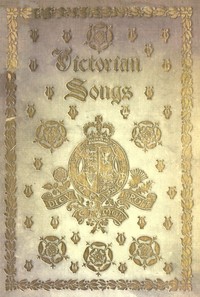
Victorian Songs: Lyrics of the Affections and Nature — Reading Notes can be approached with a clearer sense of reading commitment from its source measurements: 26,751 words, 1 hr 57 min estimated reading time, and 7 detected text sections.
The text analysis averages about 19.7 words per sentence, while the detected sections provide another way to judge how the source is divided.
Project Gutenberg metadata also associates the work with “English poetry -- 19th century,” connecting these edition facts with the source record’s subject description.
Explore this collection
These alternatives are selected using recorded categories and estimated reading time.
About 118 minutes
Adventure Picaresque Fiction
26,991 recorded words. 1 minutes difference from this book's estimate.
View Gutenberg source #22692About 126 minutes
Adventure Picaresque Fiction
28,973 recorded words. 9 minutes difference from this book's estimate.
View Gutenberg source #74284About 91 minutes
Adventure Picaresque Fiction
20,758 recorded words. 26 minutes difference from this book's estimate.
View Gutenberg source #1719Search stored excerpts and compare books → Choose by your preferences →
Choices use stored catalog measurements. Estimates vary with reading speed. A shared category is a catalog label, not a claim that two books have the same argument or literary quality.
Search reads excerpt text stored with this catalog and links to its associated Gutenberg record. The connection is stored in the site database; this tool does not recheck that every excerpt is word-for-word identical to that external record. Excerpt search does not cover every chapter and does not verify historical publication dates.
Catalog snapshot checked: 2026-09-25. Coverage: 96 public books, 96 available source excerpts.
Read the complete public-domain text at its original source.
Read on Project GutenbergThe anthology opens with Christina Rossetti's plaintive question, 'Where are the songs I used to know?'—a line that sets a retrospective, slightly wistful tone for the collection. Edmund Garrett's editorial hand is visible in the careful arrangement of poets alphabetically, from Hamilton Aïdé to an unnamed final entry, and in the inclusion of his own illustrations. The table of contents reveals a strong emphasis on short, lyrical forms: songs, serenades, ballads, and cradle songs dominate. Edmund Gosse's introductory 'Song for the Lute' explicitly frames the volume as a garland of blossoms 'fresh and fair,' a metaphor that recurs throughout the excerpts.
Across the excerpts, flowers function not merely as decoration but as structural devices. Thomas Hood's 'Ballad' repeats the line 'It was the time of roses' as a refrain, anchoring the poem's narrative of a love that blooms in a 'newly crowned' world. Norman Gale's 'Where Winds Abound' personifies the 'shy daffadilly' that 'looks down on the ground,' using the flower's posture to mirror the poem's hesitant, early-spring mood. In 'Song for the Lute,' Gosse presents a garland of lily, rose, and narcissus as a symbol of transient beauty, then undercuts it with the reminder that both flower and wearer will 'fade and wither up and die.' This pattern—introducing a flower, then invoking its decay—recurs in several poems, suggesting a deliberate editorial selection of works that use botanical imagery to explore temporality.
Several poems in the excerpts address a beloved who is distant, proud, or unready. Gosse's speaker pleads with the beloved to 'be not proud' despite the garland offered. In Norman Gale's 'A Song,' love is figured as a 'thorn' that follows after life's 'bloom,' implying pain inherent in affection. The anonymous 'Song' (attributed to 'NORMAN GALE. 1862.') uses a developmental metaphor: the maid will 'grow / Gracious' in time, but 'To-day Love 's mute.' This emphasis on waiting and unrequited feeling is echoed in Thomas Hood's 'I Remember, I Remember,' where the adult speaker's 'spirit flew in feathers then, / That is so heavy now'—a loss of youthful lightness that parallels the beloved's unattainability. The anthology seems to favor poems where love is aspirational or remembered rather than fulfilled.
The excerpts repeatedly anchor emotion in specific times of day or year. Hood's 'Ballad' specifies 'It was the time of roses' and 'twilight' as the setting for a lovers' parting. 'I Remember, I Remember' opens with the sun 'peeping in at morn' and later contrasts the 'summer pools' of childhood with the speaker's present 'fever.' In 'Where Winds Abound,' the poem's entire argument rests on the transition from March to spring: 'Though oaks are spinning / No oak-leaves in March,' yet 'Spring 's at the core.' The anthology's title itself promises 'Lyrics of the Affections and Nature,' and the excerpts bear this out by using seasonal change as a shorthand for emotional states—spring for hope, autumn for decay, twilight for parting.
Though the excerpts do not include Gosse's full introduction, his 'Song for the Lute' serves as a de facto preface, establishing the anthology's preoccupation with ephemeral beauty. The text notes that Garrett's illustrations were originally printed on right-hand pages and have been 'shifted slightly to fall between poems' in this e-text, indicating a deliberate visual-poetic pairing. The list of illustrations (not fully excerpted) would have shown the reader which images accompany which poems. The editor's note, omitted from this e-text, originally acknowledged permissions from publishers and authors—a reminder that the anthology was a commercial production, not a private collection. This framing suggests that the reader is meant to experience the poems as part of a curated sequence, with visual and verbal elements in dialogue.
Reading the excerpts in order—from Rossetti's opening query through Hood's nostalgic 'I Remember'—reveals a deliberate arc from present longing to past recollection. The anthology rewards attention to repeated motifs: flowers, seasons, and the tension between presence and absence. Because the excerpts are incomplete, the reader cannot know how later poems modify these patterns, but the consistency of tone and imagery across the first several entries suggests a coherent editorial vision. Approach the collection as a sequence of variations on a few themes, rather than a miscellany.
Flipping through Victorian Songs the other evening, I paused on Garrett’s gentle sketches of honeysuckle and rain. There’s a particular quietness there—love held softly, not shouted. It reminded me of my old copy of Rippling Rhymes — Key Ideas to Explore, which shares that same unhurried way of letting small words carry large feelings. Odd, how two books from different eras can whisper the same weather.
Build a private reading journal entry for this title.