About 107 minutes
Elizabethan Sonnet Cycles: Phillis - Licia — Story, Setting & Ideas
Science Fiction Utopias
24,518 recorded words. 3 minutes difference from this book's estimate.
View Gutenberg source #18841
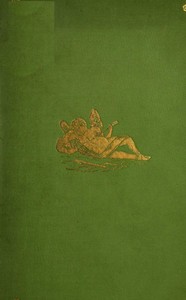
The wounded Eros — Themes and Context can be approached with a clearer sense of reading commitment from its source measurements: 23,762 words, 1 hr 44 min estimated reading time, and 5 detected text sections.
The text analysis averages about 25.0 words per sentence, while the detected sections provide another way to judge how the source is divided.
Project Gutenberg metadata also associates the work with “American poetry -- 20th century,” connecting these edition facts with the source record’s subject description.
Explore this collection
These alternatives are selected using recorded categories and estimated reading time.
About 107 minutes
Science Fiction Utopias
24,518 recorded words. 3 minutes difference from this book's estimate.
View Gutenberg source #18841About 111 minutes
Science Fiction Utopias
25,460 recorded words. 7 minutes difference from this book's estimate.
View Gutenberg source #6062About 111 minutes
Science Fiction Utopias
25,419 recorded words. 7 minutes difference from this book's estimate.
View Gutenberg source #15448Search stored excerpts and compare books → Choose by your preferences →
Choices use stored catalog measurements. Estimates vary with reading speed. A shared category is a catalog label, not a claim that two books have the same argument or literary quality.
Search reads excerpt text stored with this catalog and links to its associated Gutenberg record. The connection is stored in the site database; this tool does not recheck that every excerpt is word-for-word identical to that external record. Excerpt search does not cover every chapter and does not verify historical publication dates.
Catalog snapshot checked: 2026-09-25. Coverage: 96 public books, 96 available source excerpts.
Read the complete public-domain text at its original source.
Read on Project GutenbergCharles Gibson's The Wounded Eros (1908) is a sonnet sequence that tracks a love affair through its volatile emotional terrain. The poems shift between direct address to a beloved and meditative soliloquy, often invoking classical figures like Cupid and the moon goddess to frame personal anguish. Gibson's recurring images—wounds, fire, cold, and flight—create a cohesive symbolic language, while the sonnet form itself becomes a container for restless feeling. The sequence, introduced by William Stanley Braithwaite, was published in a limited edition of 500 copies, suggesting an intimate, deliberate craft.
The title The Wounded Eros announces the central figure: Eros, the god of love, shown as injured rather than triumphant. This wound recurs throughout the sequence, not as a single event but as a persistent condition. In Sonnet VII, the speaker asks, “What wingèd boy hath caught again my heart,” linking the god’s arrow to his own captivity. Later, Sonnet LV describes “young Cupid’s wile” and a “love-snare” that wrecks lovers. The wound is both literal and figurative—a hurt that refuses to heal, a love that brings pain. Gibson does not resolve this injury; instead, he returns to it, making the wound a structural principle. The sequence itself mimics the cycle of wounding and reopening, as each sonnet revisits the same emotional territory from a slightly different angle.
The sonnets oscillate between closeness and separation, often within a single poem. In Sonnet LII, the beloved appears “like a ghost,” and the speaker feels like a “phantom host”—a striking image of intimacy turned spectral. The poem moves from “uppermost” thought to a “tempest of my heart,” then to a “Heaven above” that forbids quenching love’s fire. This rapid shifting mirrors the lover’s instability. Elsewhere, the speaker addresses the beloved directly (“How shall I woo thee then, O fairest maid”) or steps back to apostrophize a “Mighty Prophet” (Sonnet LIII). The sequence thus enacts a drama of approach and retreat, with the sonnet form providing a controlled space for emotional volatility.
Gibson repeatedly contrasts heat and cold to dramatize the beloved’s inconstancy. In Sonnet LVII, the beloved is “Like the new moon, cold mistress of the heaven,” a “silver bow” that is “false in thy profession of love’s leaven.” The speaker fears she will become “chill and cold / As the swift snows.” Yet fire is equally present: love’s “unquenchèd fire” burns the speaker’s soul (Sonnet LVI), and the heart’s “tempest” rages (Sonnet LII). This elemental opposition structures the emotional logic of the sequence. The beloved’s coldness does not extinguish the speaker’s fire; instead, it intensifies it, creating a painful stasis. Gibson uses these elemental images to give physical weight to psychological states, making the lover’s inner world tangible.
Gibson adheres to the sonnet form throughout, but within that constraint he allows for considerable variation in tone and address. Some sonnets are pleading (“How shall I ever thank thee for the boon”), others accusatory (“Dost have no heart, sweet one”), and still others resigned (“Yet why repine? ’Tis he who laughs that wins”). The form itself becomes a metaphor for the lover’s condition: the tight rhyme scheme and meter impose order on chaotic emotion, just as the speaker tries to contain his passion. Yet the sonnets often end with questions or unresolved images—a “love-sick cry” (Sonnet LVI), a prayer for “love to me thou still mayst give” (Sonnet LIII). The sequence does not conclude; it simply stops, leaving the wound open.
Readers approaching The Wounded Eros should attend to the interplay between the sonnet’s formal discipline and the speaker’s emotional disorder. Gibson’s sequence rewards attention to its recurring imagery—wounds, fire, cold, flight—and to the way each poem repositions the speaker in relation to the beloved. The work does not offer a narrative arc so much as a spiral of feeling, circling the same wound from different angles. Reading the sonnets in order reveals a pattern of hope, disappointment, and renewed longing that mirrors the title’s promise of a love both divine and damaged.
Gibson’s sequence leaves you with that peculiar ache of loving something half-broken, the fire and frost of it all. Sometime later, I found myself drifting through Poets of the South A Series of Biographical and Critical Studies with Typical Poems, Annotated — A Reader’s Guide, and remembered how those older voices carried the same quiet wound. A strange comfort, that kinship.
A brief reflection can help important ideas stay with you longer.