About 28 minutes
Brown William, The Power of the Harp, and Other Ballads — A Reader’s Guide
Science Fiction Utopias
6,323 recorded words. 2 minutes difference from this book's estimate.
View Gutenberg source #26788
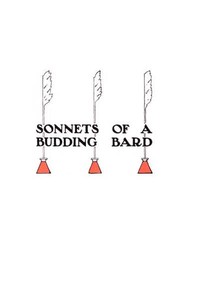
For Sonnets of a Budding Bard — Background and Themes, the stored edition analysis reports 6,872 words, 30 min estimated reading time, and 2 detected text sections.
The text analysis averages about 23.3 words per sentence, while the detected sections provide another way to judge how the source is divided.
Project Gutenberg metadata also associates the work with “Humorous poetry, American,” connecting these edition facts with the source record’s subject description.
Explore this collection
These alternatives are selected using recorded categories and estimated reading time.
About 28 minutes
Science Fiction Utopias
6,323 recorded words. 2 minutes difference from this book's estimate.
View Gutenberg source #26788About 28 minutes
Science Fiction Utopias
6,224 recorded words. 2 minutes difference from this book's estimate.
View Gutenberg source #28826About 27 minutes
Science Fiction Utopias
5,999 recorded words. 3 minutes difference from this book's estimate.
View Gutenberg source #26790Search stored excerpts and compare books → Choose by your preferences →
Choices use stored catalog measurements. Estimates vary with reading speed. A shared category is a catalog label, not a claim that two books have the same argument or literary quality.
Search reads excerpt text stored with this catalog and links to its associated Gutenberg record. The connection is stored in the site database; this tool does not recheck that every excerpt is word-for-word identical to that external record. Excerpt search does not cover every chapter and does not verify historical publication dates.
Catalog snapshot checked: 2026-09-25. Coverage: 96 public books, 96 available source excerpts.
Read the complete public-domain text at its original source.
Read on Project GutenbergEach of the twenty-five sonnets in Nixon Waterman's 1907 collection is introduced by a title that specifies the exact circumstances of its composition—'Lines Wrote in School Whilst I Shouldst Have Been Studyin’ My Lesson' or 'Sonnet Wrote Whilst Retrospectively Contemplatin’ My First Cigar.' This framing device, repeated throughout, establishes a consistent persona: a school-age boy who writes poetry when he ought to be doing something else. The sonnets are not presented as polished literary works but as spontaneous, slightly rebellious acts of composition. Waterman sustains this conceit by using deliberately archaic verb forms—'I’dst,' 'thou may,' 'wast'—in a voice that is clearly modern and colloquial, creating a persistent comic tension between the high form of the sonnet and the low, everyday subjects it treats.
Every sonnet in the collection is anchored to a specific moment of composition, announced in the title: 'Lines Wrote Whilst Smartin’ from Punishment Received for Lyin’,' 'Thoughts Thought Whilst Thinkin’ of Peary on a Hot Summer Day.' This repeated structure does more than organize the book; it becomes the central joke. The speaker is always caught in the act of writing, often when he should be doing something else—studying, mowing the lawn, recovering from a hornet sting. The titles themselves are miniature narratives, and they create a rhythm of expectation: the reader knows each poem will begin with a predicament and end with a wry observation. Waterman never breaks this frame, and the consistency of the conceit gives the collection a unified, almost diaristic feel, as if the reader is peering over the shoulder of a boy who cannot stop versifying.
Waterman's speaker consistently uses archaic verb forms—'I’dst,' 'thou may,' 'wast,' 'hast,' 'dost'—that belong to an earlier era of English poetry. Yet these forms are applied to thoroughly modern, mundane activities: smoking a cheap cigar, bathing in a bathtub, mowing the lawn. The effect is deliberately incongruous. In 'Sonnet Wrote Whilst Retrospectively Contemplatin’ My First Cigar,' the speaker laments, 'It gav’st my system a tremendous jar!' The elevated language clashes with the subject, producing humor. This technique is sustained across the collection: the speaker uses 'thou' and 'dost' while complaining about chores or schoolwork. The archaic diction is not an affectation of the author but a marker of the persona's pretension—a boy trying to sound like a poet and failing in a way that is endearing rather than grating.
The sonnets shift frequently between indoor and outdoor settings, often within a single poem. 'Lines Wrote in School Whilst I Shouldst Have Been Studyin’ My Lesson' begins in a classroom but imagines the speaker as a poet in 'velvet clothes.' 'Thoughts Thought Whilst Mowin’ the Lawn on a Saturday Afternoon' places the speaker outdoors, sweating over a chore, while his mind wanders to literary fame. 'Sonnet Wrote Whilst Thinkin’ About a Vacation Spent on a Farm' moves from the farmhouse to the fields and back. This back-and-forth creates a sense of restlessness: the speaker is never fully present in any location. The indoor scenes are associated with constraint—school, punishment, chores—while the outdoor scenes offer freedom but also labor. Waterman uses these transitions to underscore the speaker's dissatisfaction with his immediate surroundings and his desire to escape into poetry, even as the poems themselves remain firmly rooted in the physical world.
Waterman's sonnets are filled with concrete, often unpoetic images: a half-starved cat, a hornet, a turkey, a soda fountain, glue and tar in a cheap cigar. These details ground the poems in physical experience. In 'Lines Wrote Whilst Recovering from an Accident Caused by a Hornet,' the speaker's pain is rendered with comic specificity. In 'Thoughts Thought Whilst Thinkin’ of a Thanksgivin’ Day Turkey,' the turkey becomes a symbol of both desire and guilt. Animals appear frequently—Mary's lamb, a gnat, a cat—often in similes that deflate the speaker's self-importance: 'I didst not have the gumption of a gnat.' Food and bodily discomfort are linked: the first cigar makes the speaker ill, the soda fountain offers relief, the Thanksgiving turkey is anticipated with greed. These recurring images create a texture of everyday life that contrasts sharply with the lofty aspirations of the sonnet form, reinforcing the collection's central tension between the mundane and the poetic.
Waterman's collection rewards a reading that pays attention to the gap between the speaker's pretensions and his actual circumstances. The sonnets are best approached not as individual lyrics but as a sequence, where the repeated framing device and the consistent persona create a cumulative comic effect. Readers may notice how the archaic diction becomes more familiar with each poem, and how the settings—schoolroom, farm, home—build a coherent world. The illustrations by John A. Williams, though not reproduced here, likely amplify the humor. This is a book that asks to be read in order, with an ear for the persistent, affectionate mockery of its own form.
There’s something tender in how Waterman’s rustic jester trips over his own grand words, pretending solemnity while grinning at the absurdity. That same warm ache lingers in older ballads, where silliness and sorrow share a campfire. I find myself returning to the Minstrelsy of the Scottish Border, Volume 2 (of 3) Consisting of Historical and Romantic Ballads, Collected in the Southern Counties of Scotland; with a Few of Modern — Key Ideas to Explore for that same patient, knowing smile.
Use these questions to collect your thoughts before moving on.