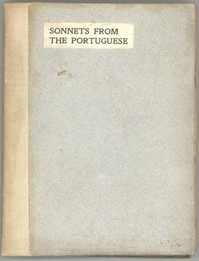

Original sonnets on various subjects; and odes paraphrased from Horace — Background and Themes
Edition facts
Anna Seward opens her 1799 collection with a preface that is as much a formal manifesto as an introduction. She asserts that ninety-one of her one hundred sonnets are “strictly Sonnets,” varying only in the rhyme scheme of the first eight lines, and she quotes Mr. White’s definition to distinguish the true sonnet from “minute Elegies of twelve alternate rhimes.” This attention to structure—the placement of pauses, the quadruple rhymes—signals a poet deeply engaged with the technical demands of the form. The volume then moves into the sonnets themselves, which range across subjects from landscape to reflection, and concludes with a set of odes paraphrased from Horace, each accompanied by notes that Seward addresses to “their unlearned Readers.”
The Sonnet as a Contested Form
Seward’s preface establishes the sonnet as a site of formal rigor. She cites Milton’s English and Italian sonnets as models, noting that only one of Milton’s English sonnets ends with a couplet, yet she allows herself that licence in three of her own. The preface’s defensive tone—anticipating criticism of her sex and her Horatian paraphrases—frames the entire collection as a deliberate act of craft. In the sonnets themselves, this attention to structure is visible in the varied placement of pauses and the handling of the volta. For instance, the opening sonnet invokes “bright Imagination” to “relume / Thy orient lamp,” a line that enjambs across the octave-sestet boundary, demonstrating Seward’s command of the form’s rhythmic possibilities.
Movement Between Scenes: The Odes from Horace
The Horatian paraphrases shift the collection’s register from personal reflection to public, classical allusion. In the first ode, addressed to Mæcenas, Seward moves rapidly through a series of vignettes: the triumphant youth at the Olympic games, the merchant torn between home and sea, the hunter leaving his bride. Each stanza presents a distinct scene, linked by the theme of ambition and desire. The notes appended to these odes explain Roman customs—such as the mid-day feast as a mark of luxury—and clarify allusions for readers without classical education. This movement between the ancient world and the reader’s present is a structural principle of the volume, as Seward juxtaposes her own sonnets with translations that reanimate Horace’s voices.
Recurring Images: The Sea, the Storm, and the Sheltered Home
Across both sonnets and odes, certain images recur with notable frequency. The sea appears as a site of peril and temptation: in the first ode, the merchant “sees the gathering danger rise” and “sends a thousand yearning sighs / To his dear shelter’d home.” The storm is a figure for emotional or moral upheaval, while the home—often described as “sylvan” or “rural”—represents safety and stasis. This binary is not simple; the merchant, once safe, is “fir’d with the hope of wealth” and returns to the sea. Seward’s own sonnets, though less narrative, echo this tension between the allure of the distant and the comfort of the familiar, a pattern that gives the collection a cohesive emotional geography.
The Poet’s Self-Presentation and the Reader’s Role
Seward’s preface and notes construct a specific relationship with her audience. She anticipates criticism—particularly of her sex—and preemptively defends her work by citing precedents from Dryden and Pope. The notes to the odes are explicitly addressed to “unlearned Readers,” suggesting a desire to make classical poetry accessible without condescension. In the odes themselves, the poet’s voice is often self-deprecating: Horace’s speaker claims that “bright Learning’s ivy crown / Exalts above a mortal fate,” but Seward’s version adds a plea to Mæcenas: “should’st thou rank me with the lyric Choir, / To Glory’s starry heights thy Poet would aspire.” This interplay between ambition and deference, between the poet’s craft and the reader’s judgment, permeates the volume.
Seward’s collection rewards attention to its formal choices and its movement between the personal and the classical. The sonnets and odes are best read not as separate enterprises but as complementary explorations of how structure shapes meaning. Readers may find it useful to compare Seward’s Horatian paraphrases with the original Latin or with other eighteenth-century translations, noting where she diverges in imagery or tone. The preface, though defensive, offers a valuable window into the period’s debates about poetic form and gender.