
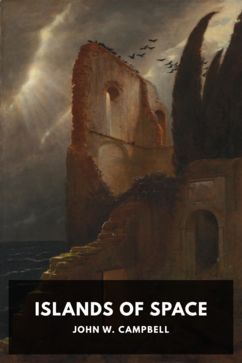
Islands of Space - John W. Campbell
Published in 1931, John W. Campbell's Islands of Space is a foundational piece of science fiction that reads like a blueprint for the genre's golden age. It’s pure adventure, driven by a simple, powerful idea: what if we could go anywhere?
The Story
The plot kicks off with a brilliant invention: the faster-than-light space drive. A small crew of scientists, led by the daring Arcot, Morey, and Wade, don't wait for government approval or a grand mission. They just fuel up their ship, the Ancient Mariner, and head into the void. Their journey is a series of incredible first contacts. They discover alien races, witness the death throes of stars, and explore bizarre planets. The main thread involves finding civilizations under siege or in collapse, often due to cosmic disasters or their own advanced technologies backfiring. The humans repeatedly have to think their way out of problems using their unique understanding of physics, becoming unlikely heroes in conflicts far from home.
Why You Should Read It
Reading this is like watching a classic adventure film. The science is often hand-wavy (it was written before quantum mechanics was mainstream!), but that’s not the point. Campbell’s strength is the awe of discovery. Every new star system holds potential for wonder or terror. The characters are classic pulp heroes—brainy, brave, and a bit cocky—which makes them fun to follow. You’re not here for deep psychological drama; you’re here for the moment they flip a switch and see a planet no human has ever laid eyes on. It captures that raw, optimistic spirit of early sci-fi where the universe was a big, mysterious playground waiting to be explored.
Final Verdict
This book is a must for science fiction history fans and anyone who loves a straightforward, sense-of-wonder adventure. You can see the DNA of later stories like Star Trek in its episodic structure and problem-solving crew. If you prefer hard sci-fi with rigorous accuracy, the vintage tech talk might feel dated. But if you can embrace its 1930s perspective, Islands of Space offers a thrilling, fast-paced ride to the farthest corners of a wildly imaginative universe. It’s a reminder of why we look up at the stars in the first place.
This work has been identified as being free of known copyright restrictions. Enjoy reading and sharing without restrictions.
Edward Lopez
6 months agoThe layout is very easy on the eyes.
Daniel Young
1 year agoAfter finishing this book, the pacing is just right, keeping you engaged. Truly inspiring.
Ashley Gonzalez
1 year agoVery helpful, thanks.
Paul Brown
3 months agoIf you enjoy this genre, the storytelling feels authentic and emotionally grounded. Worth every second.








Michelle Robinson
1 year agoEnjoyed every page.