
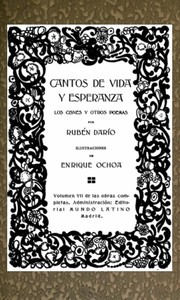
Cantos de Vida y Esperanza, Los Cisnes y otros poemas. by Rubén Darío
Okay, let's be clear: this isn't a book with a plot in the normal sense. You won't find detectives or epic battles here. 'Cantos de Vida y Esperanza' is a journey through a poet's mind at a turning point in history. Published in 1905, it collects poems where Rubén Darío, the father of Latin American Modernism, steps away from the pure, decorative beauty of his earlier work and stares into the abyss of the new century.
The Story
Think of it less as a story and more as a series of emotional snapshots. The book is divided into sections that map Darío's inner landscape. One moment he's writing passionate, musical odes to Spain and its history. The next, he's gripped by a profound spiritual crisis, questioning God and his own faith. Then, the famous 'swan' poems appear—these elegant birds represent the old, refined artistic ideals he fears are becoming extinct. The real tension comes from his identity struggle: a Nicaraguan who became a literary superstar in Europe, he feels caught between continents, cultures, and epochs. The 'conflict' is his desperate search for hope ('esperanza') and authentic life ('vida') in a world that feels increasingly mechanical and uncertain.
Why You Should Read It
I'll be honest, I expected something more... formal. What shocked me was how visceral and relatable Darío's fears feel. His poem 'Lo Fatal' (The Fatal Thing) is a masterpiece of existential dread that anyone who's ever laid awake worrying has felt. He wasn't just writing pretty words; he was using rhythm, sound, and stunning imagery to process anxiety about imperialism, loss of faith, and the soul-crushing pace of modern life. Reading him, you realize people a hundred years ago were wrestling with the same big questions we are today. It's poetry that doesn't just sit on the page—it gets under your skin.
Final Verdict
This is for the moody dreamers, the history-curious, and anyone who thinks poetry is boring. It's perfect for readers who enjoy getting inside a brilliant artist's head during a time of great change. If you liked the introspective moments in novels by Woolf or the philosophical tangles of Dostoevsky, but prefer the condensed punch of verse, Darío is your guy. Don't rush it. Sip these poems. Let the music of the language (even in translation, seek out good ones!) and the weight of the ideas sink in. It's a short book that leaves a very long shadow.
The copyright for this book has expired, making it public property. Thank you for supporting open literature.
Mason Thompson
2 years agoGreat reference material for my coursework.



Steven Wilson
1 year agoThe formatting on this digital edition is flawless.