
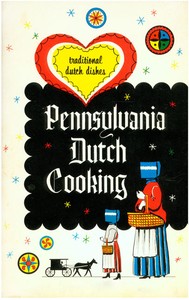
Pennsylvania Dutch Cooking by Unknown
Okay, let's be clear from the start: this isn't a novel. There's no sweeping plot or dramatic character arc. But don't let that fool you. Pennsylvania Dutch Cooking tells one of the most authentic stories you'll find on a bookshelf—the story of everyday life.
The Story
The 'plot' is the journey of a community, told through its food. The book opens with breads and breakfasts—hearty, filling foods for people who worked the land. Then it moves through the seasons: soups for cold days, pickles and relishes put up in summer, and the spectacular 'seven sweets and seven sours' that turned a simple meal into a celebration. Recipes have names like 'Fasnachts' (doughnuts for Shrove Tuesday) and 'Bott Boi' (a meat pie). There are no celebrity chef secrets here. The instructions are straightforward, sometimes frustratingly vague ('bake until done'), assuming you already have some kitchen know-how passed down from your mother. Reading it, you get a powerful sense of a culture built on practicality, generosity, and making the absolute most of every single ingredient.
Why You Should Read It
I love this book because it's a direct line to the past. It's not filtered through a modern food writer's perspective. The voice is pure and utilitarian. When it says to use 'lard,' it means lard, not a substitute. This honesty is refreshing. You're not just learning how to make pork and sauerkraut; you're learning how a family might have prepared for a long winter. The real magic is in the gaps. Who was this written for? A new bride? A young person moving away from home? The anonymity makes it feel universal, like a shared inheritance. It makes you think about your own family's food traditions and the unspoken recipes that might get lost.
Final Verdict
This book is perfect for a very specific, wonderful kind of reader. It's for the home cook who wonders about the 'why' behind recipes. It's for history buffs who want to understand culture through the lens of the kitchen, not the battlefield. It's for anyone who has ever found an old, stained recipe card in a relative's handwriting and felt a connection. You won't get glossy photos or trendy techniques. What you will get is a humble, profound, and genuinely fascinating look at how a community fed itself and, in doing so, defined itself. Keep it on your shelf next to the fancy cookbooks. You'll probably reach for it more often.
There are no legal restrictions on this material. Enjoy reading and sharing without restrictions.
Karen Martin
8 months agoAfter finishing this book, the narrative structure is incredibly compelling. Definitely a 5-star read.
Michelle Thomas
1 year agoFive stars!
Jackson Jackson
9 months agoHaving read this twice, the emotional weight of the story is balanced perfectly. I couldn't put it down.




Joseph Robinson
1 year agoPerfect.